Sunflower and Daisy Wedding Bouquets: A Sunny Clipart Collection
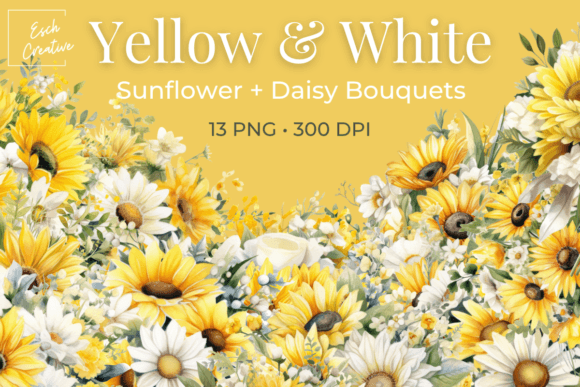
There’s something undeniably joyful about a bouquet bursting with golden sunflowers and crisp white daisies. It feels less like a formal floral arrangement and more like a captured moment from a sun-drenched meadow, radiating warmth, happiness, and a touch of playful elegance. For designers and creators, this specific color and floral combination offers a fantastic visual language. It communicates approachable sophistication, cheerful celebration, and natural beauty all at once. This is the exact feeling a well-curated watercolor clipart pack can bring to your projects, offering a versatile toolkit for infusing that sunny charm into a wide range of creative work.
The Visual Language of Yellow and White Florals
Why does this particular palette work so well, especially for wedding and celebratory designs? Yellow, in its many shades from soft buttercup to vibrant sunflower, is the color of optimism, energy, and joy. It naturally draws the eye and evokes feelings of happiness and warmth. White, on the other hand, brings purity, simplicity, and a clean backdrop. When paired, they create a balanced and dynamic visual contrast. The yellow provides the vibrant focal point, while the white offers breathing room and prevents the design from feeling overwhelming. In a watercolor style, this combination gains an additional layer of soft, artistic texture. The gentle bleed of colors and the visible paper grain effect make the illustrations feel handcrafted, personal, and full of character. This aesthetic moves beyond generic clipart, offering assets that can elevate a design from simple to stunning.
From Digital Canvas to Tangible Products
The true value of a design asset lies in its flexibility. A thoughtfully designed pack of floral illustrations isn't just for one type of project; it becomes a foundational element for building a cohesive visual identity. Consider the breadth of applications. For a wedding stationery suite, these bouquets can form the centerpiece of invitation suites, RSVP cards, and details cards. They can be scaled down for delicate envelope liners or used as decorative elements on menus and programs. The consistent floral theme ties the entire physical package together beautifully.
Beyond paper goods, the digital realm offers endless possibilities. A wedding website header featuring a soft, watercolor floral arch instantly sets the tone. Social media graphics for engagement announcements, bridal showers, or the wedding day itself become instantly more engaging with these vibrant accents. For bloggers writing about wedding planning, event styling, or floral design, these illustrations can break up text, illustrate points, and make content more visually shareable. They can even be incorporated into digital products like printable wall art, planner stickers, or social media templates for other creators to use.
Building a Cohesive Brand with Floral Elements
For small business owners and entrepreneurs in the wedding and event industry, visual consistency is paramount. Your brand's aesthetic should be recognizable across every touchpoint, from your website to your client proposals to your social media feed. Using a specific set of high-quality design assets, like a floral clipart collection, is a powerful way to achieve this. Imagine a wedding planner whose proposals consistently feature elegant sunflower and daisy motifs. This not only makes the documents beautiful but also reinforces their brand's signature style—perhaps one known for cheerful, garden-inspired celebrations.
This principle extends to logo design and packaging. A boutique bakery specializing in wedding cakes could use a simplified floral element from the pack in their logo. The same floral pattern could then adorn their cake boxes, ribbon, and business cards. This creates a memorable unboxing experience and strengthens brand recognition. When a customer sees those specific yellow and white flowers, they immediately associate them with quality and a particular aesthetic. This is the essence of effective brand identity: using consistent visual cues to tell your story and connect with your audience.
Practical Tips for Working with Watercolor Clipart
Integrating pre-made illustrations into a design requires a thoughtful approach to ensure they complement rather than dominate. First, consider the background. These watercolor elements often look best on clean, simple backgrounds—think crisp white, soft cream, or a very light, neutral gray. A busy background can compete with the delicate details of the florals.
Second, mind your typography pairing. The romantic, slightly whimsical nature of watercolor florals pairs beautifully with certain font styles. A classic serif font can add a touch of timeless elegance, while a clean sans-serif offers a modern contrast that keeps the design feeling fresh and readable. A well-chosen script font can enhance the handwritten, personal feel. The key is to test combinations. Place your chosen bouquet next to a headline in different fonts to see which pairing achieves the desired mood and, crucially, remains easy to read.
Third, use scale and composition strategically. You don't always need to use an entire bouquet. Zooming in on a cluster of flowers can create a beautiful, abstract background texture. Isolating a single daisy or sunflower can serve as a delicate icon or bullet point. Layering elements with varying levels of transparency can add depth and sophistication to a layout. The goal is to use the assets creatively to serve your specific design goals, whether that's creating a bold centerpiece or a subtle decorative touch.
Ensuring a Professional and Polished Finish
Even the most beautiful assets require careful implementation to achieve a professional result. Readability is non-negotiable. If overlaying text on a floral element, ensure there is sufficient contrast. Often, placing text in a solid-colored box or using a subtle text shadow can help it stand out without losing the floral charm. Always check the resolution of your final output, especially for print materials. A design that looks sharp on screen may appear pixelated when printed at large sizes.
Finally, a crucial but often overlooked step is understanding the licensing of your design assets. For any commercial project—whether you're selling a product, creating a design for a client, or using the graphics on a monetized blog—it is essential to use assets with a clear commercial license. This protects you legally and ensures you are respecting the work of the original artist. Reputable design asset providers will clearly outline what is and isn't permitted with their licenses, giving you peace of mind as you create and sell your beautiful work. By choosing high-quality, licensed assets and applying them with care, you can create designs that are not only visually stunning but also professional, cohesive, and built to last.